


College of Arts, Sciences, and Education
School of Education
(231) 591-5361
[email protected]
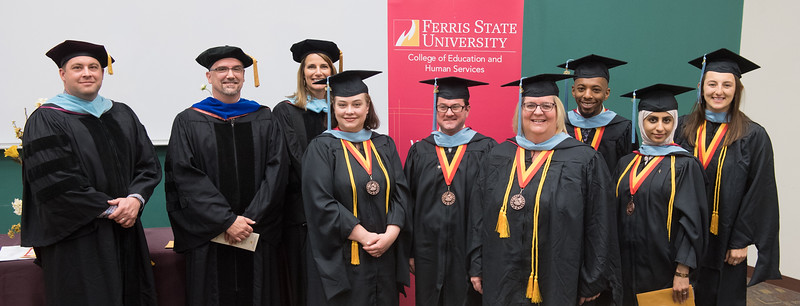
Master of Science Educational Leadership (MSEL)
The Master of Science in Educational Leadership graduate program prepares aspiring leaders in schools and organizations with the knowledge, experience, and professional skills needed to lead effectively.
Students complete a core of theoretical and experiential coursework designed to build a solid foundation for leadership practice. The program blends the flexibilty of online learning sessions with practical experiences that allow students to practice leadership skills, collaborate with peers, and apply learning in meaningful ways.
A centerpiece of the program is the structured internship experience. Candidates are sponsored and mentored by a local district or approved educational organization, providing authentic, hands-on leadership opportunities. During the internship, students apply leadership theory in real-world settings, strengthen their administrative competencies, and complete a comprehensive project designed to directly benefit their sponsoring organization.
This collaborative partnership model supports local districts—particularly rural schools—in
developing future leaders while helping to address administrator shortages. Students
may also complete internship experiences in non–P–12 educational settings, offering
flexibility for those pursuing leadership roles beyond traditional school environments.
Graduates of the program are actively engaged in leadership roles in their organizations,
ranging from department chairs to directors. Graduates holding teaching certifications
are eligible for building-level Michigan administrator certification, positioning
them for roles such as principal or other site-based leadership positions.
All application materials are reviewed by an admissions committee to determine eligibility
and recommend appropriate action. Upon acceptance, each student is paired with a dedicated
graduate advisor who provides individualized guidance throughout the program.
If you are ready to use your leadership skills more effectively, the Master of Science
in Educational Leadership provides the preparation, mentorship, and real-world experience
to help you lead with confidence and impact.
Master of Education in Curriculum & Instruction (MEd)
Master of Education Curriculum and Instruction - Subject Area Concentration is designed for educators and professionals who want to deepen their expertise, expand their career opportunities, and strengthen their instructional practice.
This program provides advanced professional development through a combination of graduate
core coursework and specialized study in subject areas such as math and special education.
Whether you are looking to refine your classroom practice or broaden your professional
impact, this degree offers a strong foundation for growth and advancement.
Students engage in rigorous coursework focused on curriculum design, instructional
strategies, assessment, and educational research, while also developing in-depth knowledge
in their selected concentration area. The program is structured to support both current
educators and professionals seeking to enhance their credentials. Those who pursue
the special education concentration are eligible for a Michigan add-on teaching endorsement.
All application materials are reviewed by an admissions committee to determine eligibility
and recommend appropriate action. Upon acceptance, each student is paired with a dedicated
graduate advisor who provides individualized guidance throughout the program.
If you are ready to advance your expertise, strengthen your instructional impact,
and open new professional pathways, the Master of Education in Curriculum and Instruction
– Subject Area Concentration offers a flexible and supportive route to achieving your
goals.
Master of Science in Career & Technical Education (MSCTE)
The Master of Science in Career and Technical Education at Ferris State University
is designed for professionals seeking to advance their expertise in career and technical
education (CTE) and expand their leadership opportunities. This program focuses on
strengthening career and technical competencies while refining the instructional and
administrative skills needed to succeed in postsecondary settings.
This concentration is ideal for individuals interested in developing their instructional
practices at career technical centers or enhancing their development and training
skills in industry. Through advanced coursework, students develop the knowledge and
leadership capacity necessary to support workforce development initiatives, manage
academic programs, and contribute strategically to institutional growth.
The program emphasizes practical application, professional skill development, and
leadership in career-focused education environments. Whether you are looking to transition
into higher education administration or enhance your impact within a technical or
workforce-based field, this degree provides a strong foundation for advancement.
All application materials are reviewed by an admissions committee to determine eligibility
and recommend appropriate action. Upon acceptance, each student is assigned a graduate
advisor who provides personalized support and guidance throughout the program.
If you are ready to lead, innovate, and strengthen career and technical education
at the postsecondary level, the Master of Science in Career and Technical Education
at Ferris State University can help you take the next step in your professional journey.
Program Outcomes
Upon completion of the master’s program at Ferris State University, graduates will be able to:
- Articulate the status and trends in education, within the context of historical developments and current socio-political factors, in the proposal of educational, administrative, class management or educational practice processes designed to enhance the quality of education. (Transformative)
- Apply theories, models, concepts, and research findings in programs of education, teaching practices, or administration, based upon a critical analysis of their relevance to and probable effect on education. (Experiential)
- Use the research process to develop education’s body of knowledge, extend its sphere of influence, and identify and propose resolutions to educational concerns, based on an analysis of the trends and needs within the profession. (Assessment-driven)
- Exercise leadership in education through activities that provide stability and facilitate needed change and progress toward meeting collaboratively-established goals for education. (Collaborative)
- Contribute to the development and implementation of educational knowledge and effectiveness through various forms of communication to numerous publics, including the teaching profession, the educational system, and society in general. (Holistic)