March 25, 2026
Ferris State’s Francisco Vasquez applies classroom knowledge to NASA’s L’SPACE program focused on aerospace challenges and engineering research
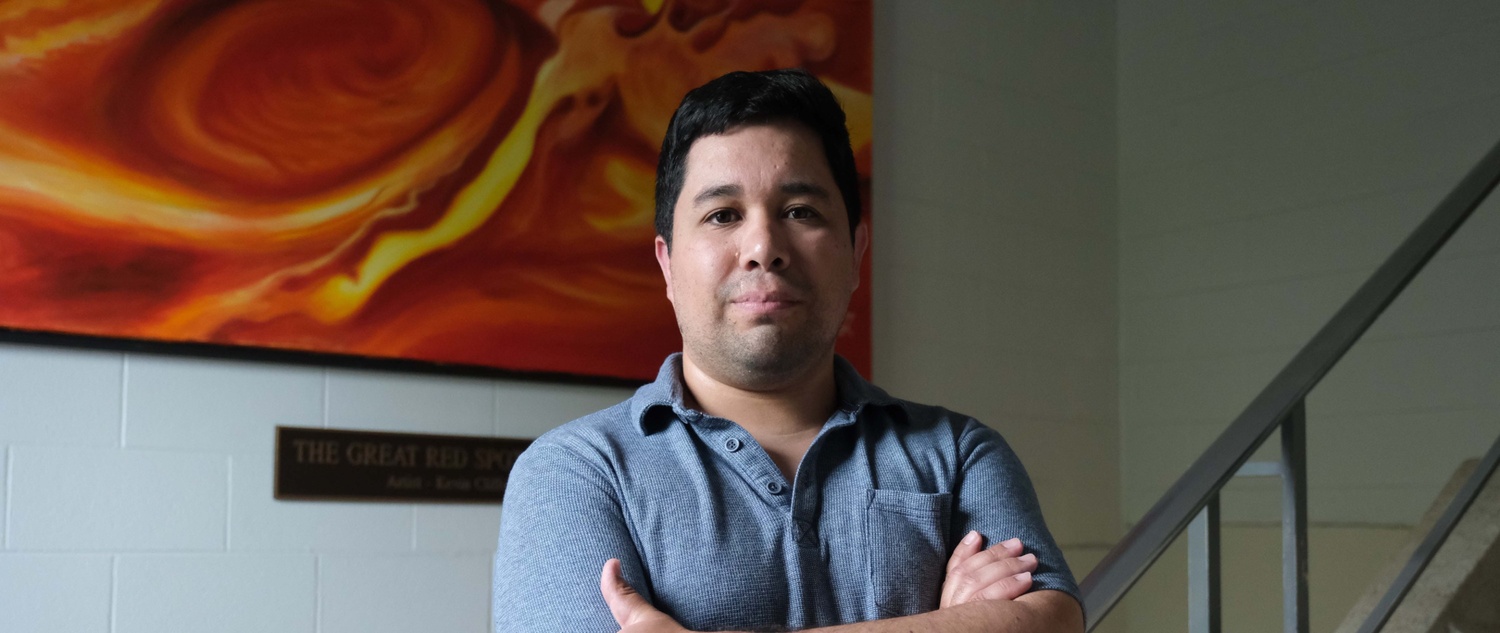
Ferris State University student Francisco Vasquez is expanding his experience in aerospace engineering through participation in NASA’s L’SPACE Program and ongoing work on a multidisciplinary project focused on long-duration space missions.
Vasquez was selected to participate in NASA’s L’SPACE Program for the Lucy Mission, which is a nationally recognized project that provides university students with practical experience in the development of space missions.
Designed to simulate the processes used in the aerospace industry, the program allows students to work in team-based environments while receiving guidance from NASA professionals, including experts from the Jet Propulsion Laboratory and the Space Transportation Office.
“This experience enabled me to apply systems engineering principles in a real-world setting while strengthening my technical skills in mission design, project management, collaboration, and problem-solving within a diverse, highly specialized team,” Vasquez said.
His other responsibilities through NASA’s L’SPACE program included serving as a payload engineer in the conceptual development of a Mars exploration mission.
In that role, he contributed to the design of a complete mission architecture known as “Red Horizon 22”, which included both a lander and a rover system. The mission was developed with the goal of exploring subsurface caverns on Mars, a challenge that required technical planning, systems thinking, and close collaboration across multiple areas of expertise.
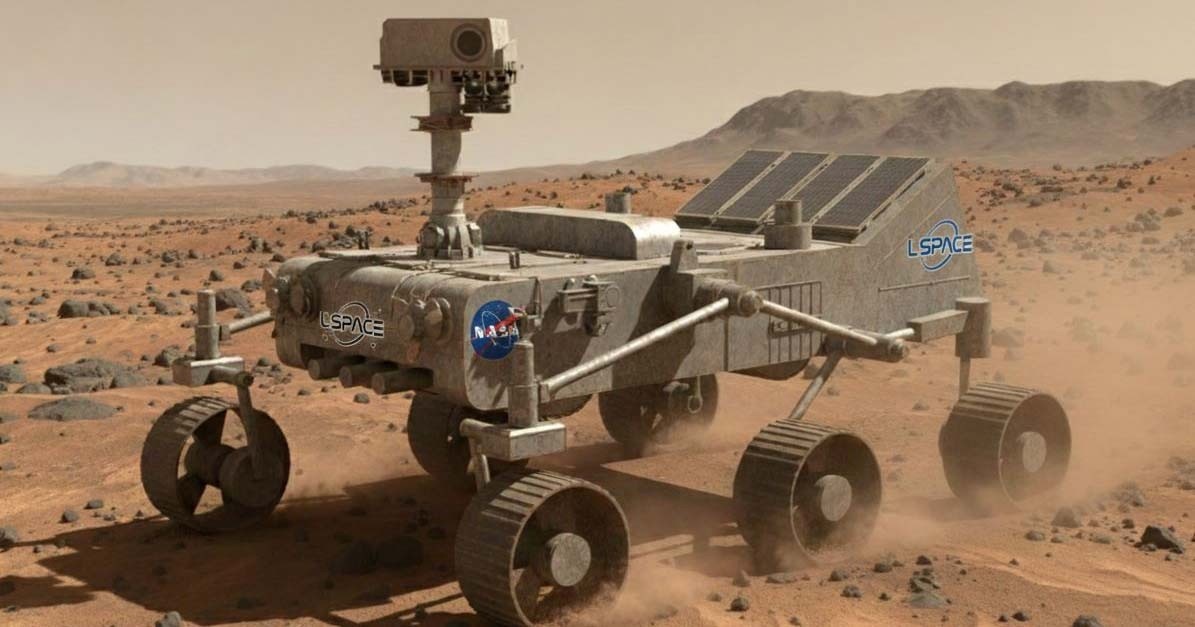
Generated image of the "Red Horizon 22" rover on Mars.
In addition to that program, Vasquez is currently working as part of a nine-person multidisciplinary team involved in the development of technologies for long-duration space missions.
“Together, those experiences have allowed me to continue growing in the program and to pursue additional opportunities in the field of space exploration,” Vasquez said.
The team includes members from mechanical, aerospace, electrical, and electronic engineering, and is focused on creating two key components: a dental care system and a specialized transport container designed according to NASA specifications. The project aims to ensure that instruments and materials can be transported safely and remain fully functional in the demanding conditions of space.
“These opportunities were strengthened by the support and mentorship of Dr. Dinesh Shetty, who recommended me for the program. I am also thankful for the research experience at Ferris State University, particularly my work on binary star orbits and exoplanets, as an important foundation that helped prepare me for these opportunities.”
Shetty and Vasquez have collaborated on other space-focused projects, earning national attention.
Earlier this year they achieved a significant milestone in astronomical research, with four of their newly developed binary-star orbital models adopted by the United States Naval Observatory.
Their work is now permanently archived in one of Astronomy’s most important reference catalogs and can be used by researchers around the world.