
April 24, 2026
Ferris State’s research infrastructure gains new capacity for innovation through $1.92 million federal grant
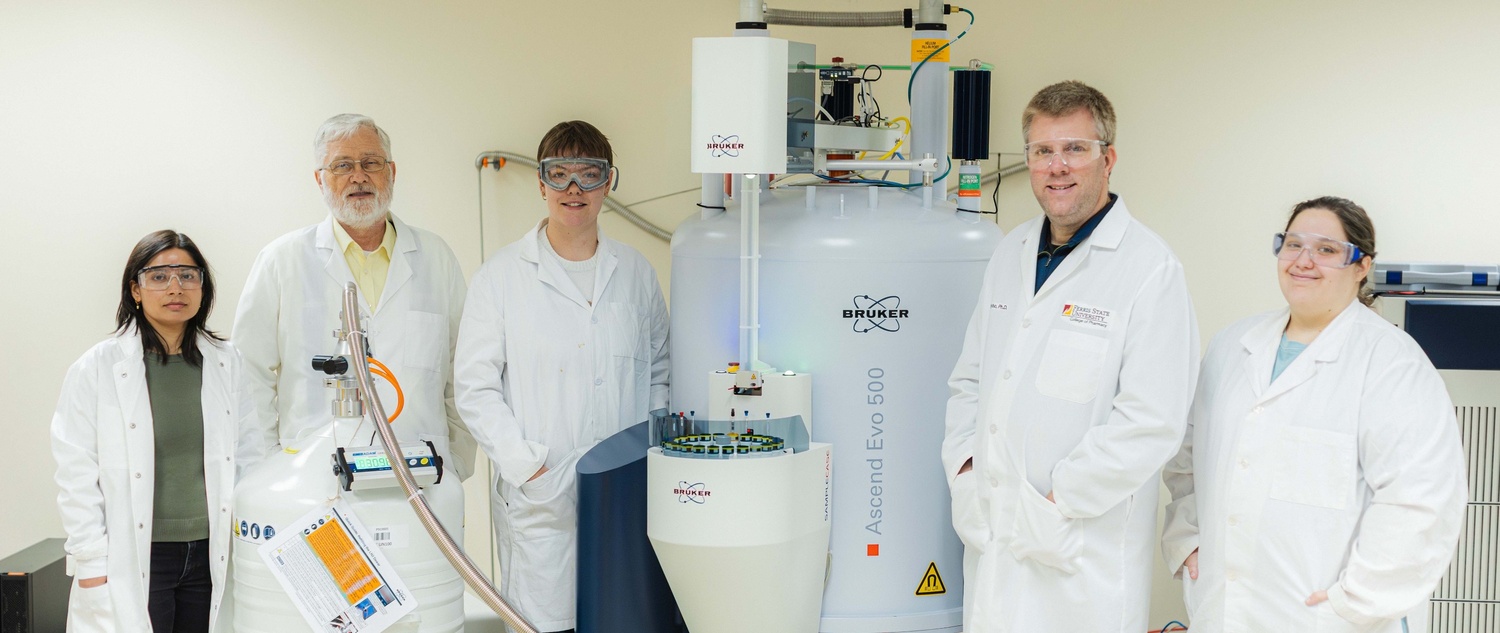
Ferris State University can now strengthen research infrastructure and expand its capacity for pharmaceutical testing innovation more effectively thanks to $1.92 million in grant funding from the U.S. Department of Commerce’s National Institute of Standards and Testing.
Dr. Thomas Dowling, director of Ferris’ Office of Research and Sponsored Programs and professor in the College of Pharmacy, said the funding helped to acquire and integrate advanced chemical analysis equipment in Ferris State’s research and teaching laboratories, furthering the ability to lead research efforts that align with the university’s strategic planning mission.
“We have identified deficiencies in research infrastructure and coupled this with our desire to enhance innovation and resource capacity across the University,” Dowling said.
Dowling also noted that in addition to scientific instrumentation, the purchase of a backup power generator enables enhanced emergency preparedness in case of catastrophic power failures.
The project aims to support the design, synthesis, and evaluation of novel chemical compounds targeting drug-resistant cancers, while also improving understanding of drug degradation and stability.
Ferris State continues to play a critical role in developing the regional biomedical workforce, with over 650 undergraduates and approximately 400 pharmacy doctoral candidates annually in STEM and health-related fields studying at the university.
With a student population heavily drawn from Michigan, 92% of whom remain in-state after graduation, Ferris State plays a critical role in developing the regional biomedical workforce.
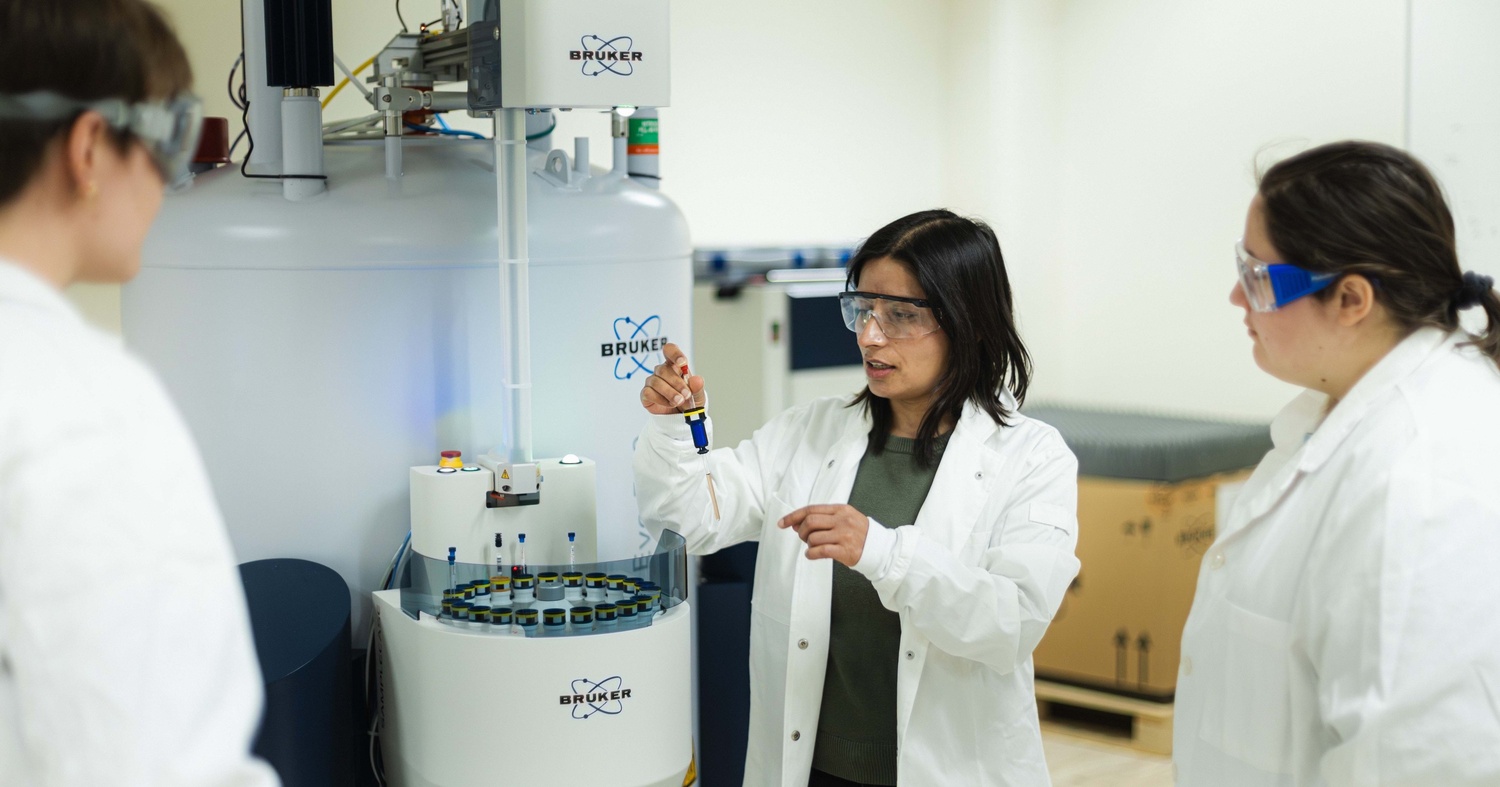
Dr. Khanal giving brief lecture on how the 500 MHz NMR instrument works to seniors Sophie Derusha and Senna Andrews, which cost nearly $1 million.
However, the students have experienced limited access to advanced laboratory equipment, particularly for chemical analysis, which in turn has constrained Ferris State’s ability to conduct timely and competitive research. Currently, some analyses require offsite processing, which slows progress and limits innovation.
Dr. Sonali Kurup, professor of Medicinal Chemistry, said the grant has already addressed those limitations by expanding research capacity across campus.
"The NIST grant provides access to the most advanced instruments, including a 500 MHz NMR, a high-end mass spectrometer with liquid chromatography and solid analysis probe capabilities, a flow cytometer, and a particle size analyzer,” she said. “This funding has significantly advanced campus research, empowered faculty to pursue new research areas, and expanded opportunities for student training and participation."
The 500 MHz nuclear magnetic resonance (NMR) instrument that Kurup mentioned cost nearly $1 million, emphasizing the university’s mission to invest in state-of-the-art research equipment for Bulldogs to gain second-to-none education.
Thanks to the recent grant funding and similar grants in years past, Ferris State will be able to further address chronic diseases such as cancer, diabetes, and heart disease which disproportionately affect rural and underserved and rural populations in Michigan.
While major research institutions (R1 universities) often lead biomedical innovation, this grant allows Ferris State to possess valuable expertise, especially among researchers with direct understanding of rural health needs.
"Ferris State’s 500 MHz NMR with cryoprobe places the university among a select number of colleges with this level of instrumental capability. It sustains Ferris State’s position at the forefront of medicinal chemistry while giving students direct access to advanced research tools,” said Dr. Eric Nybo, also a professor of Medicinal Chemistry.
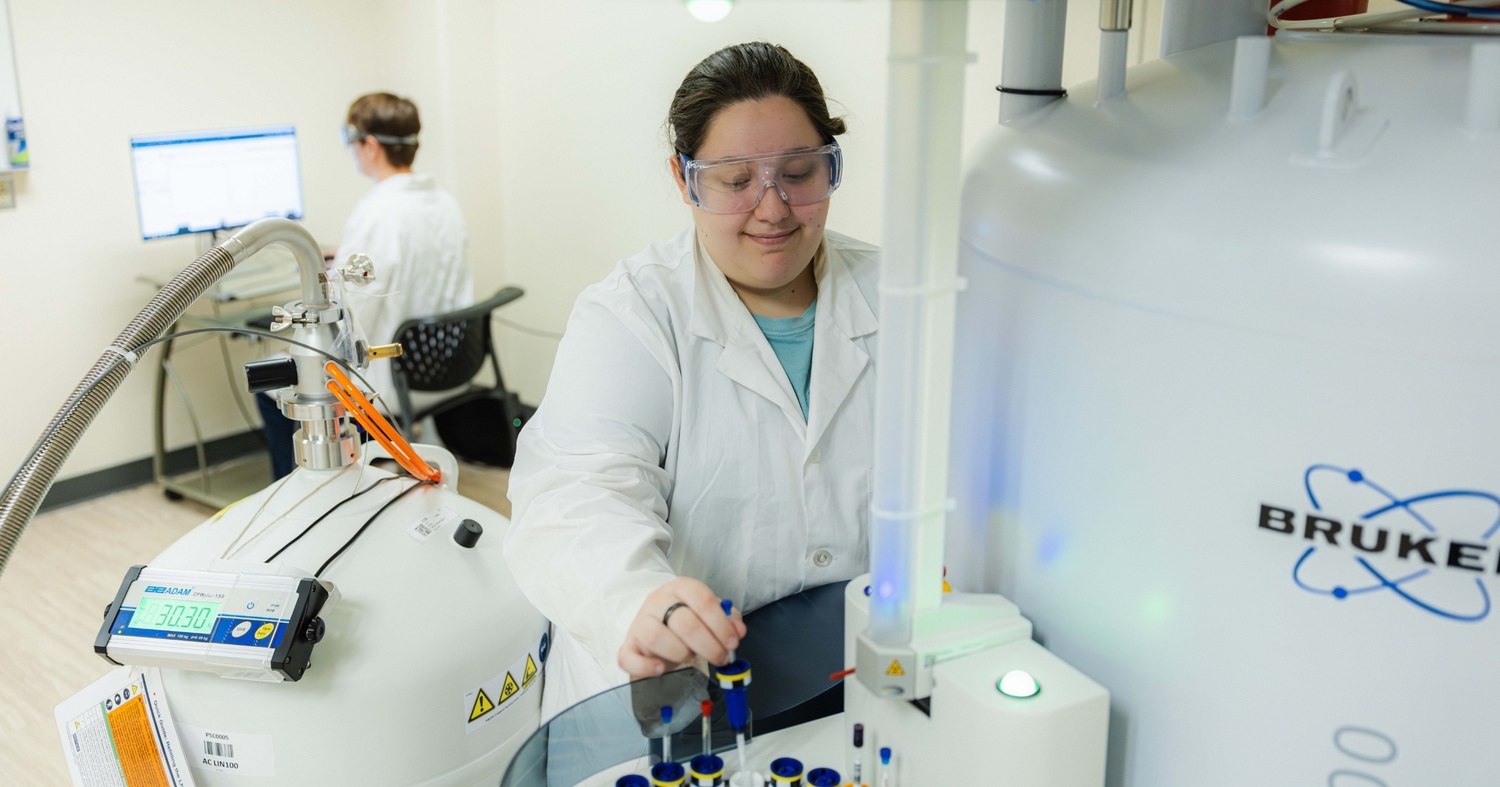
Thanks to the federal grant, Ferris State students can now conduct timely and competitive research in multiple fields of study.
The recent funding was supported by the office of U.S. Rep. John Moleenaar, R-Mich., via a proposal submitted to the House of Representatives in Washington, D.C. The proposal outlines three primary long-term goals:
- Strengthening Ferris State’s existing cancer research capabilities
- Addressing the biomedical workforce shortage by better preparing students for STEM careers
- Promoting equity in research opportunities for rural institutions
The university will acquire new NMR instruments, a benchtop LCMS, flow cytometer, gas chromatograph, and other essential laboratory tools. Funds will also be used to hire a laboratory chemical analyst position to support equipment integration, training, and protocol development.
The anticipated impacts are multifaceted. For research, the addition of high-performance NMR instrumentation will significantly reduce experiment turnaround times and enhance the university’s ability to conduct cutting-edge cancer research, while also making Ferris State more attractive for recruiting faculty.
For education, the inclusion of user-friendly benchtop equipment in core labs will improve undergraduate access to hands-on research, reduce faculty burden, and build student confidence earlier in their academic careers.
Broadly, the project will enhance Ferris State’s competitiveness in securing future research funding and enable it to contribute more effectively to regional and national scientific priorities.