

May 4, 2026
Ferris State KCAD fashion students create authentic Tulip Time costumes after research that included trip to the Netherlands
Costumes built from patterns designed by students from Ferris State University’s Kendall College of Art and Design are on stage at Holland's Tulip Time festival this week, marking the first real-world test of an authentic Dutch dancing costume they designed.
Sample costumes constructed from the KCAD-developed patterns — with adjustments made by Tulip Time to improve dancer mobility — debuted May 2. The dresses are the cumulation of intense study that included trips to the Netherlands and Belgium.
"We did need to make a few adjustments to better support the movement of our dancers, and we've created several sample costumes for this year's festival to ensure the design performs well in our many dance performances," said Jenn Ryckbost, Tulip Time's costume director. "We're grateful for the creativity and collaboration that went into this work."
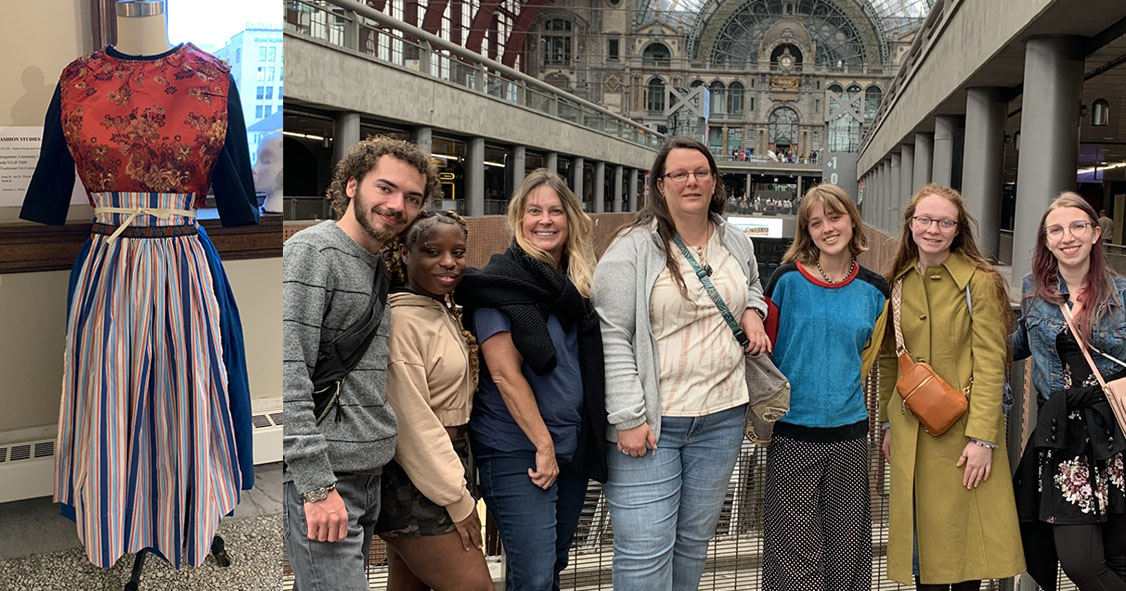
The project began when Tulip Time Executive Director Gwen Auwerda approached Lori Faulkner, professor and chair of fashion studies at KCAD's Pamella Roland DeVos School of Fashion, about redesigning the festival's Urk Region Dutch dancing costume. A visit to an Amsterdam museum revealed Tulip Time's existing version wasn't historically authentic.
Six KCAD fashion studies students tackled the redesign through Faulkner's KCFS 320 course taught by Instructor Leslie Henley, which pairs students with real clients. Three of those students are seniors Abigail Lehman, Jazadayi Diaz and Josey Bryant — who were juniors when the project took place and are graduating this May.
Lehman designed the bonnet, finding limited documentation even from Dutch museum collections. She turned to blogs, personal accounts and archival festival photos to authenticate her work — and had to ensure the pattern was replicable by home sewers, the same families who typically produce Tulip Time costumes.
"It's not only for historical authenticity, but also how can they replicate it," Lehman said. "It's mothers and grandmas and daughters all working together, so it has to fit the home sewer's needs."
Diaz constructed the circle skirt, navigating the costume's wide, four-to-five-inch hem — a construction method far outside standard modern sewing practice. Bryant designed the Kraplap, the costume's outer top layer, working without modern fasteners like zippers or buttons in favor of traditional tying methods authentic to the period.
"When you're very limited, you really have to make the best of it," Bryant said. "To learn something about another culture — it's great."
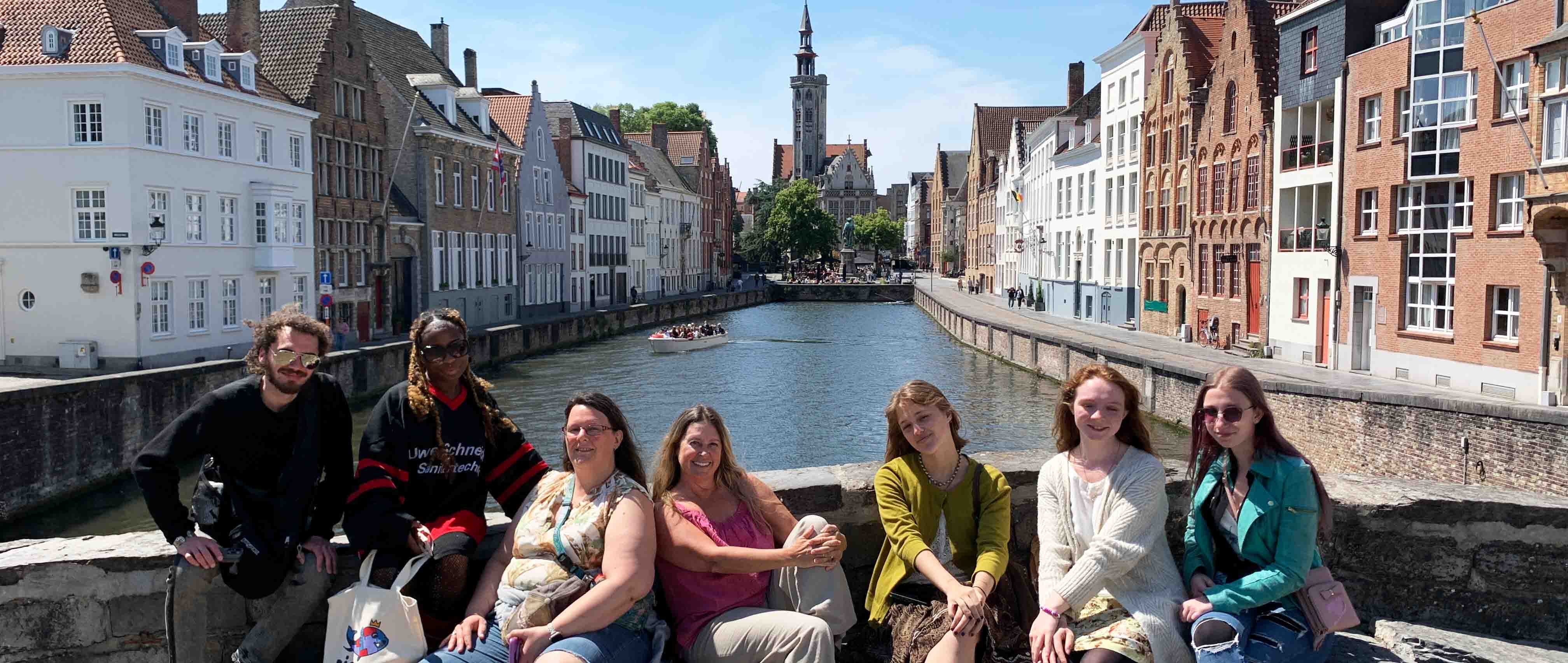
The three seniors deepened that cultural immersion on a two-week fashion research trip to the Netherlands and Belgium in May 2025, funded through a gift from donor Pamella DeVos. They visited designers, artisan studios and farms — including the Knitwit Stable, a working sheep and Angora goat farm outside Amsterdam that produces finished garments entirely in-house.
"When you really go over there and talk to these companies and interact with these people, it gives you a great opportunity to see how they started, how they do it every day, and how they finish and execute an idea," Bryant said.
The costume work extended beyond the authentic redesign. Students also created fantasy dresses inspired by Dutch aesthetics for Tulip Time's "Celebrate!" event May 5, 2025 — a recognition event for the festival's 100 corporate sponsors.
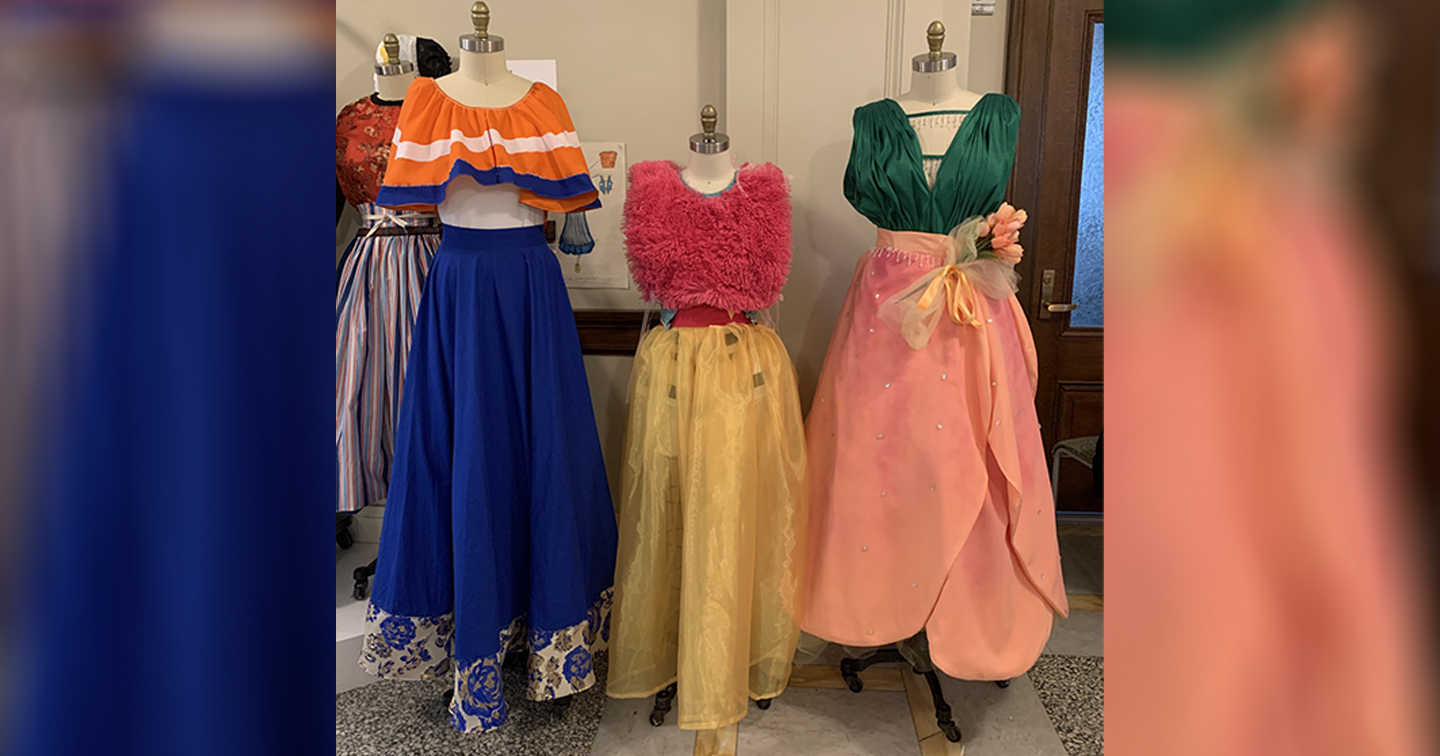
Diaz and Bryant collaborated on a Dominican Dutch fusion piece, weaving the orange and blue of the Dutch flag into the silhouette of a traditional Dominican festival dress. Lehman built a tulip-inspired gown featuring hand-pleated petals that lift to reveal a second layer beneath.
"Working with KCAD was definitely a treat for us," Auwerda said. "The students embraced the assignment and created wonderful fantasy costumes that some of our staff and dancers wore during the sponsor event. They are very creative, and I loved seeing the students help the dancers get dressed and show off their creations. The pattern they designed is being tested this year on a few dancers for a trial run to ensure they can move appropriately in them."
The event also spotlighted Tulip Time's "Join the Dance" fund, which provides financial assistance to first-year dancers who cannot afford the $250 to $500 cost of a costume. Established in 2019, the fund supported more than 100 dancers in 2025 — the largest group in over a decade.
Faulkner, who built KCAD's fashion studies program from the ground up in 2012, said projects like this one are central to her curriculum's purpose.
"I want them to have that opportunity in a safe environment where they can meet people who might have future jobs for them," she explained. "When they graduate, they're ready to go in and know the questions to ask to make people happy with their designs."
The authentic Urk Region costume is displayed on the third floor of Ferris State’s Woodbridge N. Ferris Building, located on Pearl Street in downtown Grand Rapids. Full production of the redesigned costume is expected to follow once Tulip Time completes its sampling evaluation.