
May 19, 2026
Ferris State’s Mark Dyke and Suzanne Miller advocate for mental health safety in construction, educate next generation of professionals
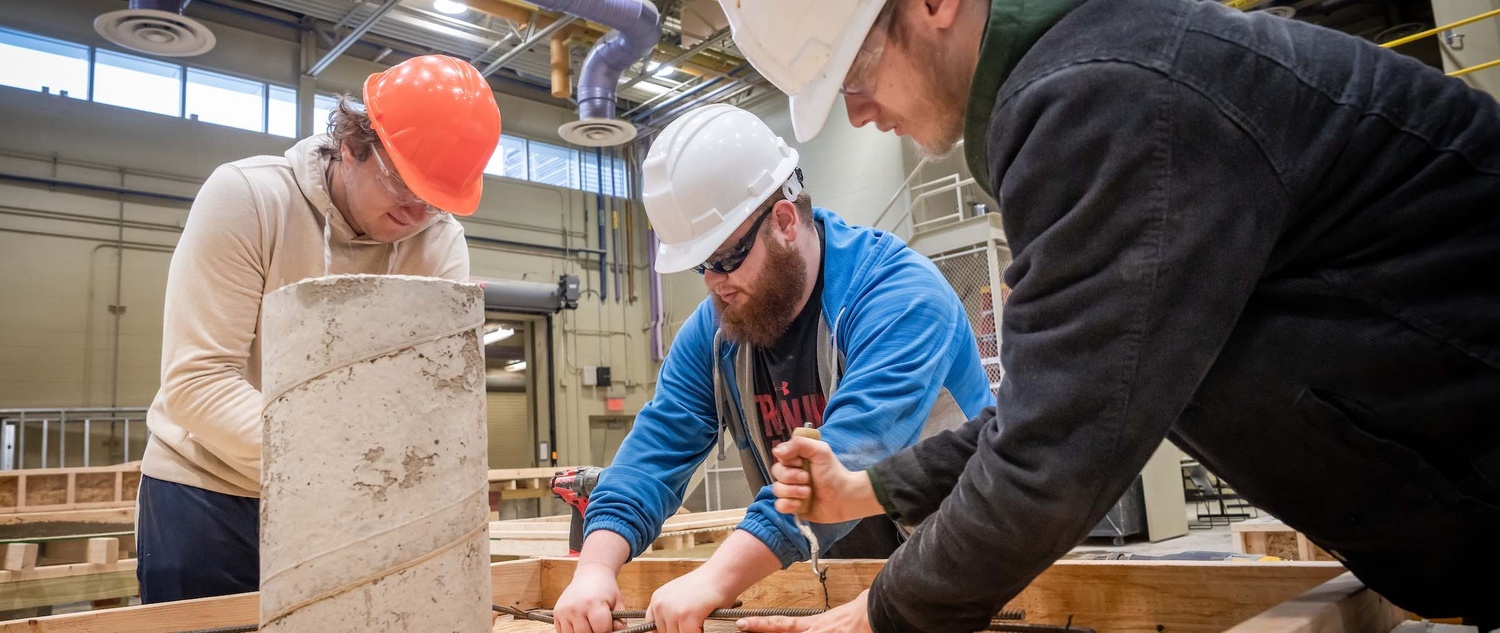
Ferris State University’s Mark Dyke and Suzanne Miller are leading the charge of addressing mental health safety, an issue they believe has been overlooked in the construction industry.
May is Mental Health Awareness month and serves as a period of reflection regarding the mental and emotional baggage that professionals in all industries carry throughout their lives. However, as conversations and awareness campaigns grow, Dyke and Miller recognize that not all professional industries have had the resources to overcome mental health barriers.
The alarming data for those struggling in the construction industry motivated Dyke to act both in the classroom and nationwide.
Serving as the co-program coordinator and an associate professor for Ferris State’s Construction Management program, Dyke is a construction professional who became a licensed therapist and has used that skillset to kickstart a unique opportunity for Bulldogs to understand the critical need for addressing mental health.
He believes mental health should be viewed the same way the industry approaches physical safety: as a core component of protecting workers and creating healthy jobsites.
“Being from the trades, having worked in construction my whole career, it became very apparent that the history of our industry was one of silence and that silence was strength,” Dyke said. “Construction workers are taught to suck it up and work harder… Once I got my counseling degree, I saw how unhealthy that was.”
National statistics show a dual trend of rising mental health awareness alongside persistent, though evolving, stigma.
While over 60 million adults in the United States now report experiencing mental illness, seven in 10 Americans still recognize a stigma exists. That likely prevents some from seeking the help they need.
Increased openness is noted, particularly among youth, with 55% of adolescents discussing mental health with professionals, though one in five still face unmet care needs.
As the national data trended upward, Dyke increased his efforts to combat what he described as the No. 1 safety issue in construction, which has led to him tackle the issue at the starting point for students preparing to enter the field.
“If we can educate our students on mental health challenges that they’re about to face in this industry, that we have historically ignored and my generation failed (to address) we don’t want the next generation to make the same mistake,” he said.
While speaking on the issue during a conference at Autodesk University in fall 2023, Dyke and Miller realized that his opportunity to speak to some 10,000 people from far and wide was great.
The moment that deeply impacted him was when he learned from a Human Resources rep from the company that one of their carpenters came into the office to seek help after attending Dyke’s conversation and specifically noted that his advice made all the difference. This helped Dyke to realize that even when you don’t feel like you’re making an impact, don’t hesitate to keep trying.
At the same time, he and Miller realized it was time to bring the opportunity to Ferris State’s classroom to educate the next generation of industry leaders and especially eliminate the stigma of being “weak for speaking up” when someone is facing a mental health crisis is eliminated.
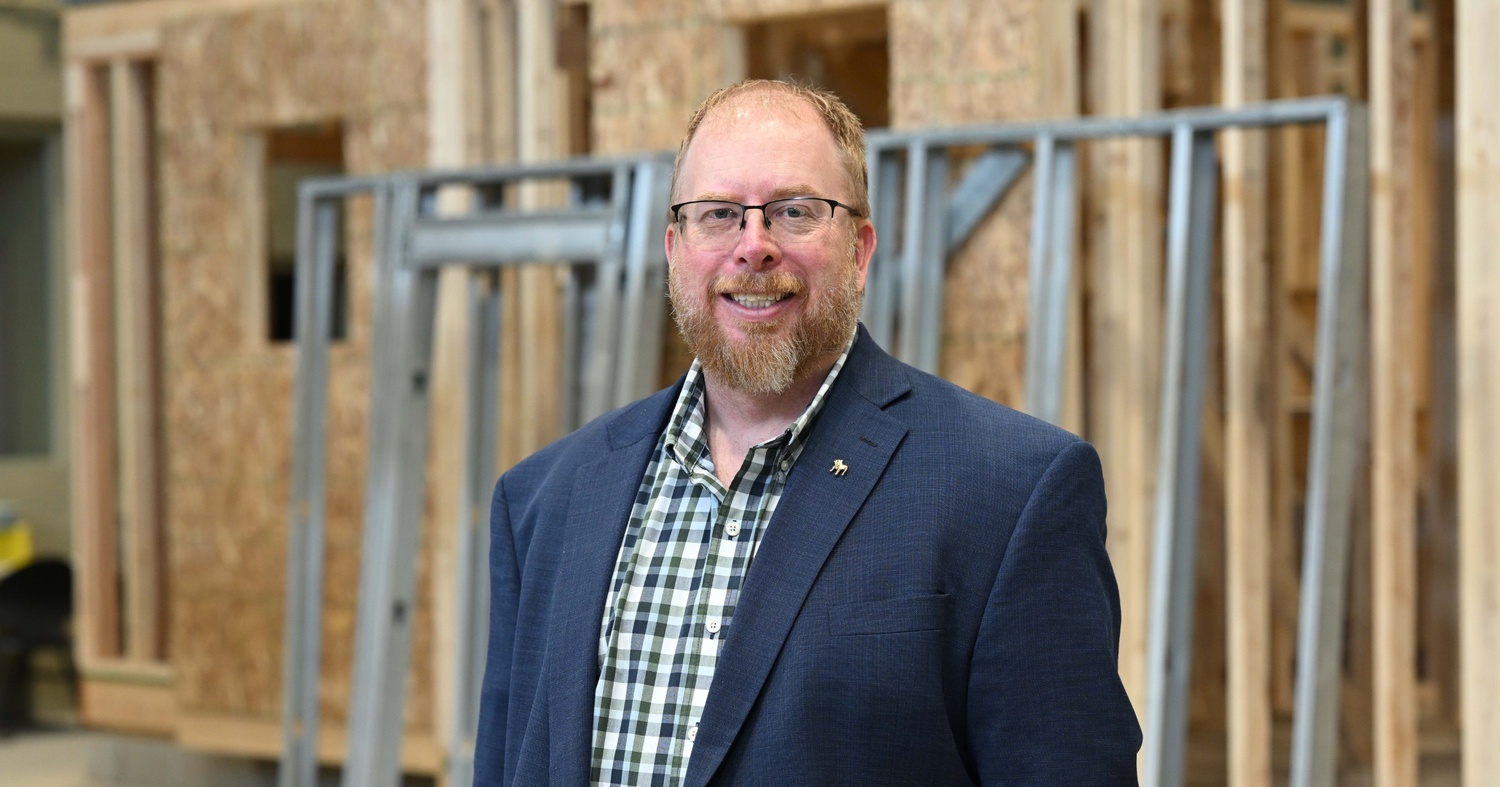
Mark Dyke admitted that mental health barriers for construction professionals have existed for decades, and has since used his positions to influence for better advocacy and available resources while maintaining a large focus on the starting point: the classroom.
That’s when the first mental health talk took place for the Construction Safety and Management course in April 2023.
Miller, Ferris State’s director of the School of Built Environment and a professor, quickly recognized how the Bulldog community could benefit from Dyke’s mental health leadership and knowledge.
“There are of course other health concerns and other triggers that contribute to mental health issues in our industry, but we really wanted to focus on the self-help aspect,” Miller said. “We recognize that our students are going to have to help others someday, they’re going to be leaders, so if we expect them to look out for others, we have to provide them those tools (classroom conversations) that we’re working on making better each day.”
As time went on, both Miller and Dyke agreed that they had to take the next step from just requiring a "safety evening" conversation where students learn more about the mental health crisis in construction.
This eventually led to the creation of a new soft skills course that prepares students for the interpersonal and leadership challenges of the construction industry, including communication, teamwork, professionalism, resilience, and mental health safety.
The “Professional Relationships” soft skills class will include curriculum that allows students to become nationally certified for mental health safety in construction.
Both Dyke and Miller noted they aren’t aware of any other university offering this opportunity, which not only will help Bulldogs standout even further in their profession, but will benefit the industry exactly as they both intended years ago.
The pair recognizes that more opportunities wouldn’t be possible without the support of College of Engineering Technology Dean Kate O’Connor, the advisory board, and other university administrators.
With the new course on the horizon, the pair are also encouraging more institutions statewide and across the country to follow Ferris State’s footsteps. Whether it’s getting more faculty and staff certified in mental health safety, or educating the generation of professionals, they want to see an exponential decrease in the number of mental health cases for construction workers and beyond.
Dyke is also conducting a white paper, which will provide industry leaders with an in-depth and evidence-based report that identifies how to continue addressing mental health safety in construction.
“The numbers are dropping, but we have a long way to go,” he said. “We’re going to keep working until those numbers continue to fall. We (construction) don’t want to be in first place for this category.”
Miller also emphasized the point of checking in on someone who might be struggling, or to never hesitate to reach out to others when you’re experiencing a crisis, as she and Dyke reassured that free resources are always available to anyone in need.
“I’m hoping that if we continue teaching students in college, specifically our construction students, that it will be normalized to speak up when you need help,” Miller said. “We want looking out for one another to become part of the culture. If students learn early that it’s okay to speak up and support others, we can help create a healthier future for the industry.”