June 3, 2026
Commitment to sustainability: Ferris State’s KCAD claims first place in national Campus Race to Zero Waste competition
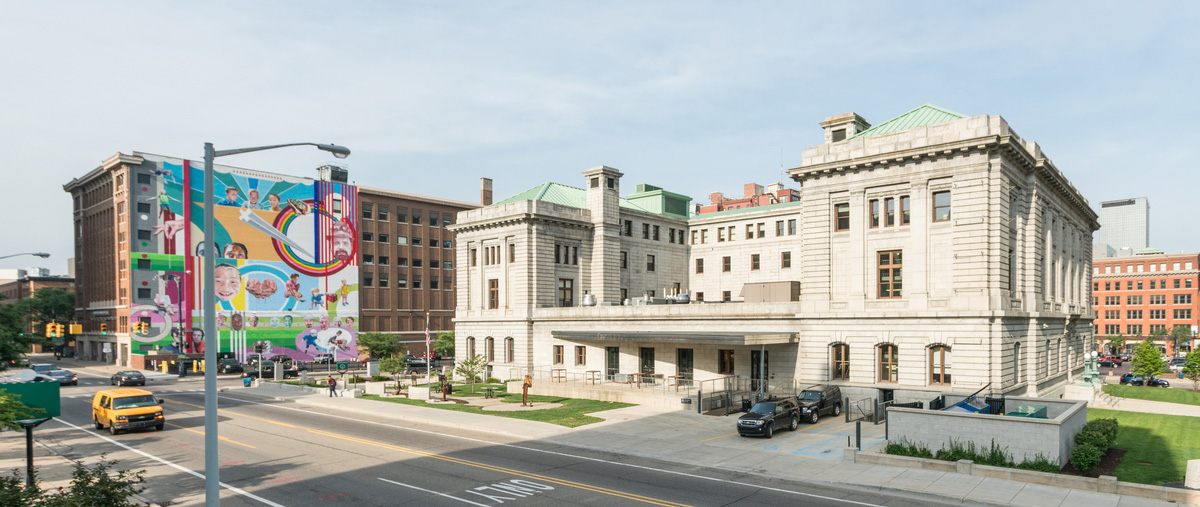
Ferris State University’s Kendall College of Art and Design won first place in the Diversion category, small campus division, of the National Wildlife Federation's 2026 Campus Race to Zero Waste — atop a field of 51 participating schools with an 87.45% waste diversion rate.
The finish moves KCAD up from second place in the same category in 2024. During the eight-week competition, held Feb. 1 through March 28, the campus community recycled 1,633.5 pounds of co-mingled materials and 5,225 pounds of cardboard, composted 5,178 pounds of food waste, and sent just 1,728 pounds to landfill or incineration.
"We are stewards of 20% of the world's fresh surface water in the Great Lakes State," said Gayle DeBruyn, a Collaborative Design professor and KCAD's sustainability officer. "That is an obligation and a responsibility that we need to pay attention to."
Sustainability is a key pillar of Ferris State's strategic plan.
DeBruyn has led KCAD's competition participation since the college first entered in 2019 — then called RecycleMania — finishing 88th among 213 schools. The program traces to a Collaborative Design sustainability class in 2018-19, when students identified the need for a campus waste management system and built one.
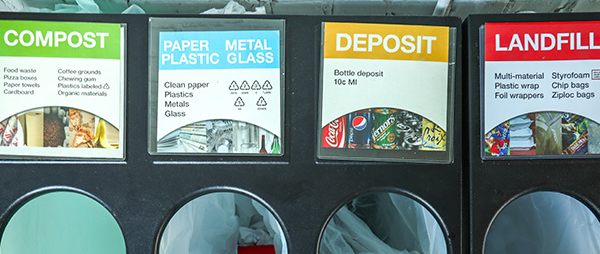
That system runs on a straightforward principle: Sort at the source and make it easy for everyone involved. KCAD uses a hub-and-spoke model, with five-sort waste stations on every floor, elevator and stairwell rather than individual bins in each classroom. Students pack out what they bring in. Custodial staff empty fewer bags from fewer collection points.
"I don't design for people, I design with people to solve problems," DeBruyn said. "It has to be a team sport."
The approach extends well beyond recyclables. KCAD's FLEXlab now 3D-prints exclusively in PLA — a plant-based filament that composts in roughly four months — confirmed through a field test at Organicycle, the college's Grand Rapids composting partner. TerraCycle handles chip bags and snack wrappers from campus vending machines. A bin for Michigan's 10-cent bottle returnables sits near the exit; unclaimed deposits are left accessible to the city's unhoused population.
Caterers who work with KCAD must use compostable cutlery and avoid single-serving condiment packets. Leftover food from catered events moves first to a sharing table, then to a campus food pantry — another initiative that originated from the sustainability class and operates today under Nicole DeKraker, KCAD’s director of Student Engagement.
The 2026 competition also exposed a gap: Outside contractors were disposing materials incorrectly. In response, DeBruyn helped develop clearer waste-sorting guidance for those who work in the buildings.
KCAD's participation in the competition is a requirement of Second Nature, a higher education sustainability organization with which the college is affiliated.
The affiliation also requires tracking transportation impacts; The Rapid transit system in Grand Rapids sends DeBruyn annual data on student bus pass usage, allowing KCAD to calculate its carbon footprint reduction from commuter behavior.
"Design is a practice," DeBruyn said. "How can we continue to ask hard questions to figure out better solutions than what we've been doing?"