

January 26, 2026
Museum on the move: Volunteers helping transport artifacts to new location for Ferris State’s Jim Crow Museum
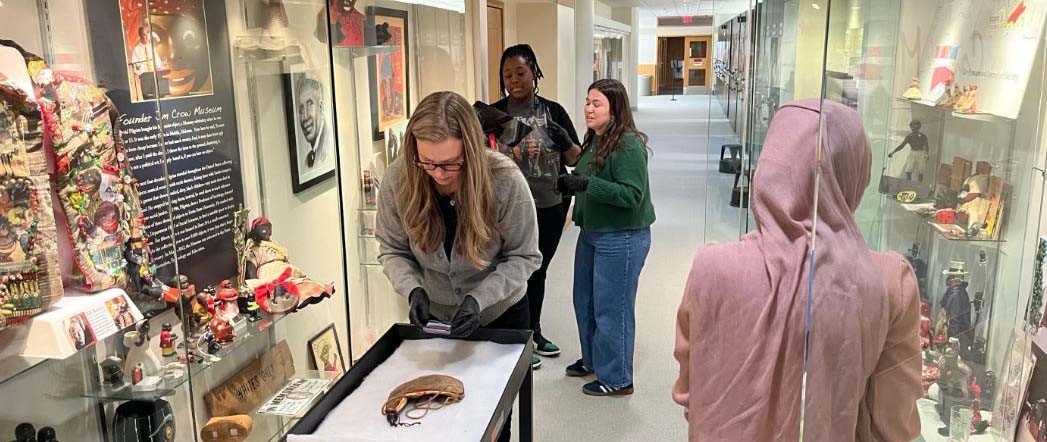
Ferris State University’s Jim Crow Museum is on track to open in the fall, with campus and community volunteers starting the process of helping to safely and carefully transport more than 30,000 artifacts to the new location.
The expanded, standalone museum will be located near the State Street entrance to the Big Rapids campus and will be equipped to handle the entire collection of artifacts with a state-of-the-art archive and research component.
The Jim Crow Museum is a one-of-a-kind resource that leaders say will be a space for teaching, learning, and meaningful conversations about race that inspire understanding, healing, and positive change.
Ferris State has had a museum with a collection of racist materials for three decades, using the objects of intolerance to teach tolerance and promote social justice.
The new building will allow the university to expand the discussion to focus on how people pushed back against racism and inspire future generations.
“It’s wonderful that so many people want to assist us with the process of safely moving our collection to the new museum,” said David Pilgrim, Ferris State’s vice president for Diversity, Inclusion, and Strategic Initiatives. “This is another type of opportunity for the museum to connect to our campus and community and strengthen a bond that has grown over three decades.”
Jim Crow was the name of the racial caste system, which operated primarily, but not exclusively, in southern and border states between 1877 and the mid-1960s. Under Jim Crow, African Americans were relegated to the status of second-class citizens. Jim Crow represented the legitimization of anti-Black racism.
The transition of the artifacts started in early January and saw dozens of Ferris State administrators, students, faculty, alumni, and community members moving the first of the objects.
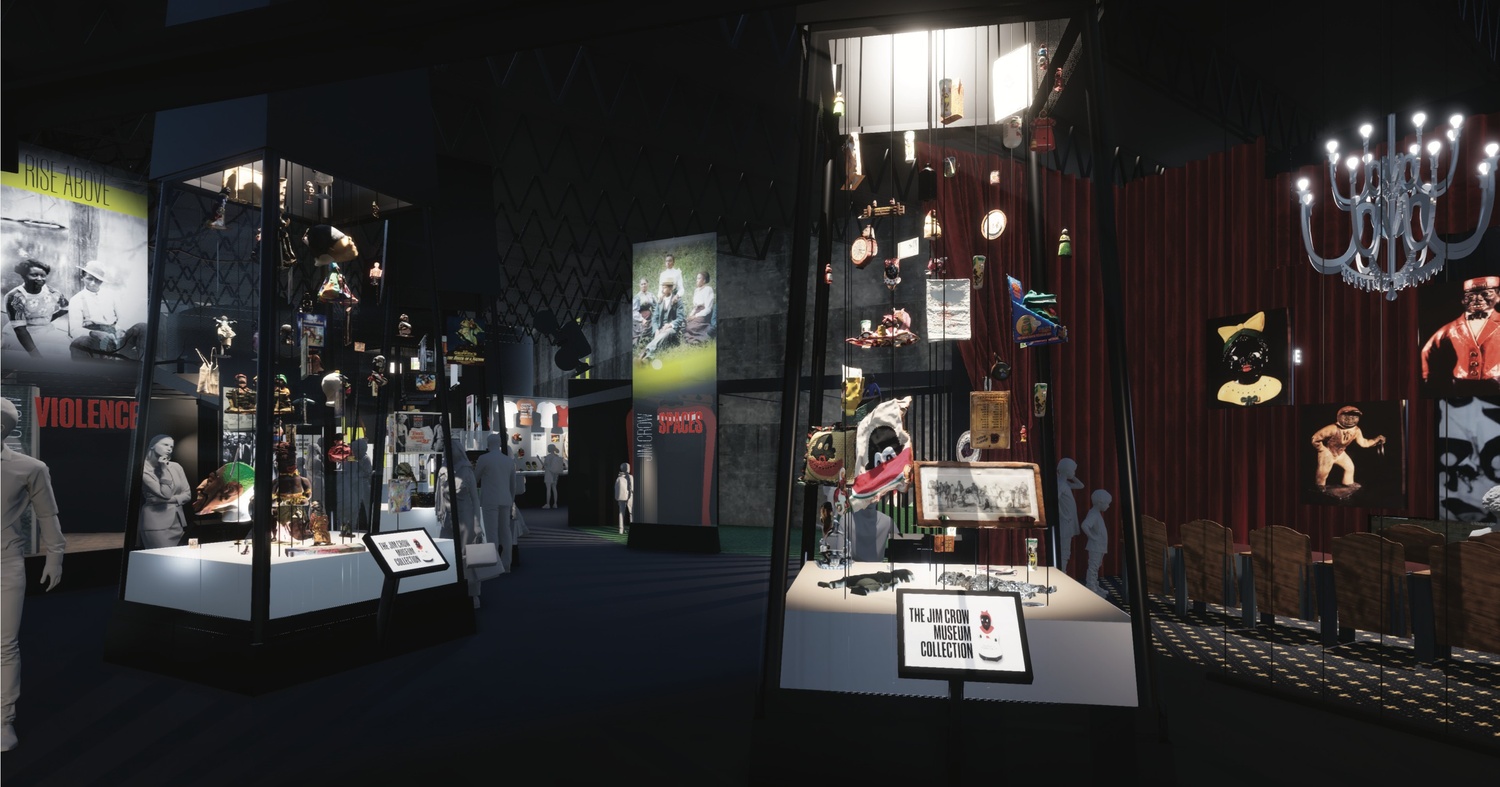
A rendering of what part of the new Jim Crow Museum building will feature.
More than 200 high-priority objects were pulled from display and long-term storage that will be featured in the “Understanding Objects” display. The exhibit is designed as a conveyor belt of rotating artifacts with custom mounts. This experience invites visitors to slow down, look closely, and consider the deeper messages and meanings the objects in our galleries convey.
Cyndi Tiedt, Collections Manager of the Jim Crow Museum at Ferris State, was impressed by the work that was done in the early goings, considering the patience and delicate touch needed for the large-scale move.
“This is the first time we’ve ever done a comprehensive volunteer program at the museum, and week one was more mainly figuring out what worked and what didn’t, and thankfully the volunteers were really patient with us and were fun to work with,” Tiedt said. “Basically, our volunteers are getting a crash course on museum preservation, and we couldn’t be more thankful for their help.
The work includes retrieving objects currently on display or in long-term storage, packing the objects according to their material type, and reducing movement as much as possible inside the archival moving boxes.
Tiedt noted that the “first batch” of objects must be ready to transfer to the new 26,000-square-foot facility by late April. With time and resources needed to be spent efficiently, the volunteers were already able to start working on the next phase of the project before week one wrapped up.
Now with the larger facility projected to open in fall 2026, Tiedt knows it will create the option for more programming events, volunteer opportunities, storage space for objects, and state-of-the-art displays for visitors. This includes the artifact explorer interactive screens that will offer extensive details about objects.
The space will serve as a resource for university scholars, and welcome school groups, faith communities, civic organizations, corporate leaders, policymakers, law enforcement, civil rights advocates, and many others.
“Moving to this new building is going to be better and safer for the collection. It’s going to allow us to expand the work we’re doing, and by both of those things, we can increase our reach and impact on the community,” Tiedt said. “We are the stewards of our collection, so we have to make sure we have the space to preserve them.”
Roughly 29,000 objects are still waiting to be pulled from their existing displays. Those interested in volunteering are encouraged to sign up through this link.
Times and dates are limited to help maintain appropriate space for the museum’s objects.