

April 16, 2026
Ferris State's Jim Crow Museum wins state award for community-driven collection move
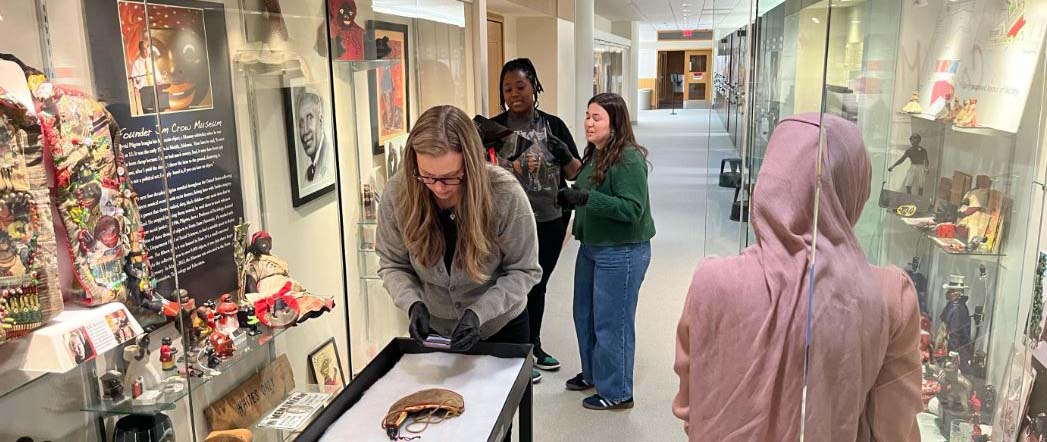
Ferris State University's Jim Crow Museum earned the Michigan Museums Association's Peninsulas Prize for Community Engagement, recognized for a volunteer program that invited community members — many from historically marginalized groups — into the hands-on work of preserving one of the country's most significant collections on racial injustice.
The MMA presents the Peninsulas Prize to acknowledge a project, program, or process that creates or sustains a sense of inclusion, justice, or belonging with under-represented participants. The Jim Crow Museum will receive the award at the association's annual event on May 14 at the Michigan Science Center in Detroit.
Collections manager Cyndi Tiedt, the museum's main contact for the nomination, spearheaded the volunteer initiative as part of the broader effort to relocate the museum's entire collection — more than 30,000 artifacts — to a new, 26,000-square-foot facility near the State Street entrance to Ferris State's Big Rapids campus. The expanded, standalone building is on track to open in fall 2026.
"We're honored to receive the Peninsulas Prize for Community Engagement from the Michigan Museums Association," Tiedt said. "This recognition reflects the dedication of our volunteers, whose work preparing the collection for our move shows the power of community in action."
David Pilgrim, the museum's founder and Ferris State's vice president for Diversity and Inclusion, agreed, adding that the award underscores the role community plays in the museum's mission.
"This recognition highlights the importance of engaging our community in building the museum and in the meaningful conversations it will spark when it opens,” he said.
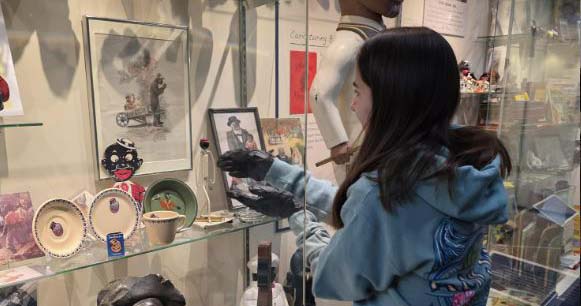
Over 30,000 artifacts had to be carefully pulled from display to be prepped for their move to the new Jim Crow Museum location on Ferris State's main campus in Big Rapids.
Carrie Weis nominated the museum for the award. The MMA's board of directors selects the Peninsulas Prize recipient from a field of nominations each year.
Excerpts from the nomination highlighted how the volunteer program went beyond logistics — training participants in professional collections care practices and demystifying museum work that is often inaccessible to under-resourced communities.
"Volunteers from under-represented and historically marginalized communities were trained in professional collections care practices, affirming their role as trusted partners in preserving history rather than passive observers of it," the nomination reads.
The program tracked success through volunteer numbers and diversity, total hours contributed, participant retention across multiple phases of the move, and qualitative feedback on confidence and belonging. The museum also monitored social media reach and engagement and noted interest from peer institutions looking to replicate the model.
For three decades, Ferris State has used the collection of racist objects and exhibits to teach tolerance and promote social justice. Jim Crow refers to the racial caste system that operated primarily in southern and border states between 1877 and the mid-1960s, relegating African Americans to second-class citizenship.
The new facility will expand that mission — adding state-of-the-art displays, interactive artifact explorer screens, a dedicated archive and research component, and increased capacity for school groups, faith communities, civic organizations, law enforcement, policymakers, and others.