

July 1, 2026
Beat the heat: Ferris State HVACR professor has tips for keeping homes cool as heat advisories cover West Michigan
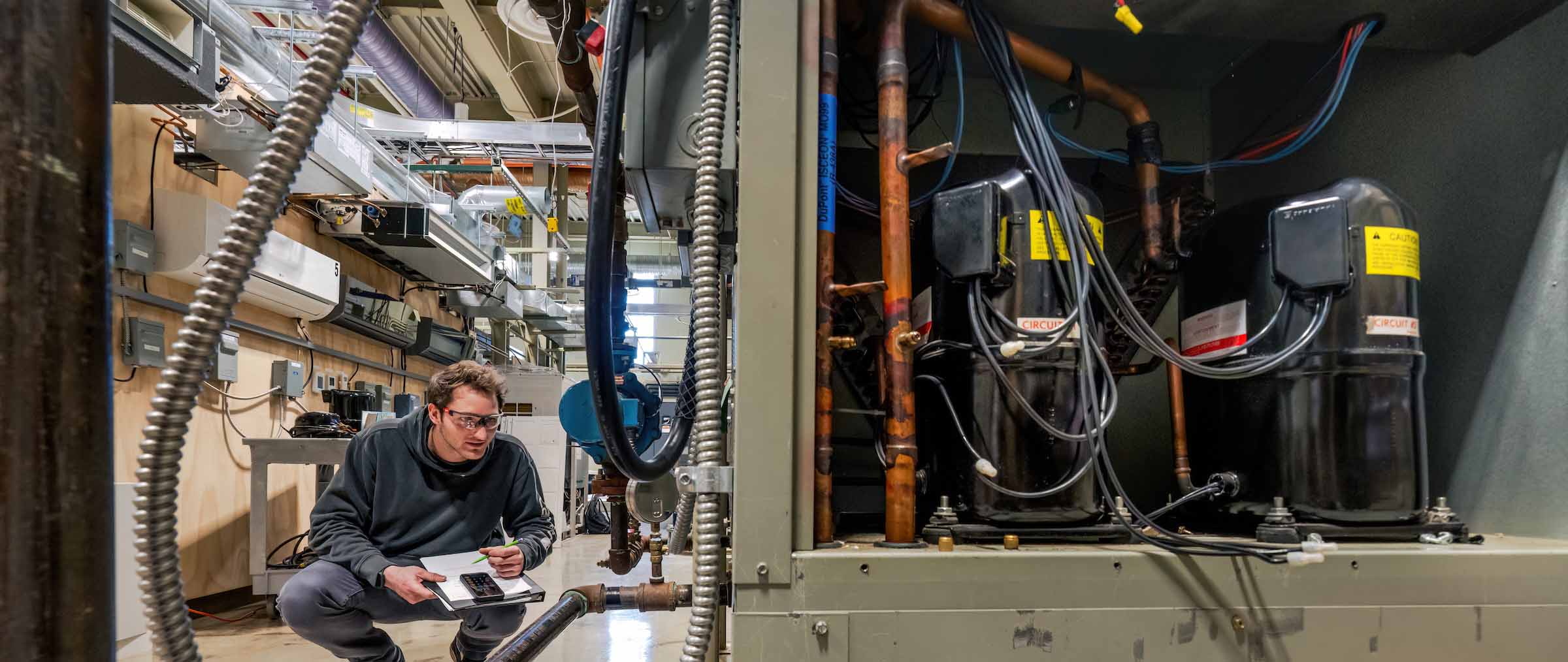
With much of Michigan under a heat advisory or heat warning, Ferris State University professor Jake Guest has a clear message for homeowners looking to stay safe: act before the system fails.
Ferris State is one of only two institutions in the United States to offer a Bachelor of Science in HVACR, preparing students for careers in a rapidly growing field.
Guest, an assistant professor in the School of Built Environment at the College of Engineering Technology, said one neglected maintenance task tops the list of causes for service calls when extreme heat arrives.
"The simplest and most commonly overlooked maintenance item is changing the air filter," Guest said. "A dirty filter restricts airflow, reduces cooling capacity, and forces the system to work much harder. During periods of extreme heat, that additional strain can push an already stressed system into failure."
Guest outlined six steps homeowners can take now to stay cooler without raising their energy bills.
Keep the thermostat steady. Large temperature swings make the system work harder. Holding a consistent setting throughout the day is more efficient than constantly adjusting it.
Replace or clean the air filter. A clogged filter restricts airflow and reduces efficiency — and it is one of the easiest fixes a homeowner can make, Guest said.
Close the blinds. Blocking direct sunlight through windows, especially during afternoon hours, reduces the heat load the air conditioner has to overcome.
Use ceiling fans the right way. Fans cool people, not rooms, Guest said. Turning them off when leaving the room avoids wasting energy.
Avoid heat-generating appliances during peak hours. Ovens, dryers, and similar appliances add heat the air conditioner has to counteract. Running them in the evening eases that burden.
Check the vents. Furniture, rugs, or curtains blocking supply or return air vents restrict airflow without the homeowner realizing it. Vents should remain open and unobstructed.
That last tip connects to one of the most persistent myths in home cooling: that closing vents in unused rooms conserves energy. Guest said the opposite is true.
"Most residential HVAC systems are designed to move a specific amount of air," he said. "Closing vents increases system pressure, can reduce efficiency, create comfort issues throughout the home, and in some cases contribute to equipment wear. It's usually much better to leave vents open and allow the system to operate as designed."
A struggling air conditioner often signals trouble before it fails — but most homeowners miss the signs, Guest said.
A system running much longer than normal, struggling to reach the thermostat setting, producing weak airflow, or making unusual noises warrants attention. Water around the indoor unit or ice on refrigerant lines are also indicators. Catching those issues early can prevent a far more expensive repair, he said.
Cooling the inside air is only part of the equation. Limiting heat-generating activities during the hottest hours — skipping the oven, for example — and improving insulation or sealing air leaks reduces how hard the air conditioner has to work.
The most valuable question a homeowner can ask, Guest said, is one almost no one asks: Is the system operating the way it was designed to?
"Many people only ask whether the air conditioner is running," he said. "A system can still produce cool air while operating inefficiently because of poor airflow, improper refrigerant charge, dirty coils, or other issues. Having the system inspected before problems develop can improve comfort, lower energy costs, and extend equipment life."
That diagnostic mindset drives how Ferris State prepares students in the HVACR program. Students spend significant time diagnosing actual equipment rather than studying theory alone, practicing airflow measurement, electrical performance, refrigerant system operation, and system controls through real troubleshooting scenarios.
"We emphasize a systematic diagnostic process, so graduates understand how to identify the root cause of a problem instead of simply replacing parts," Guest said. "Our program is very lucky to have large labs with multiple types of equipment, from residential to commercial units, for the students to get their hands on."
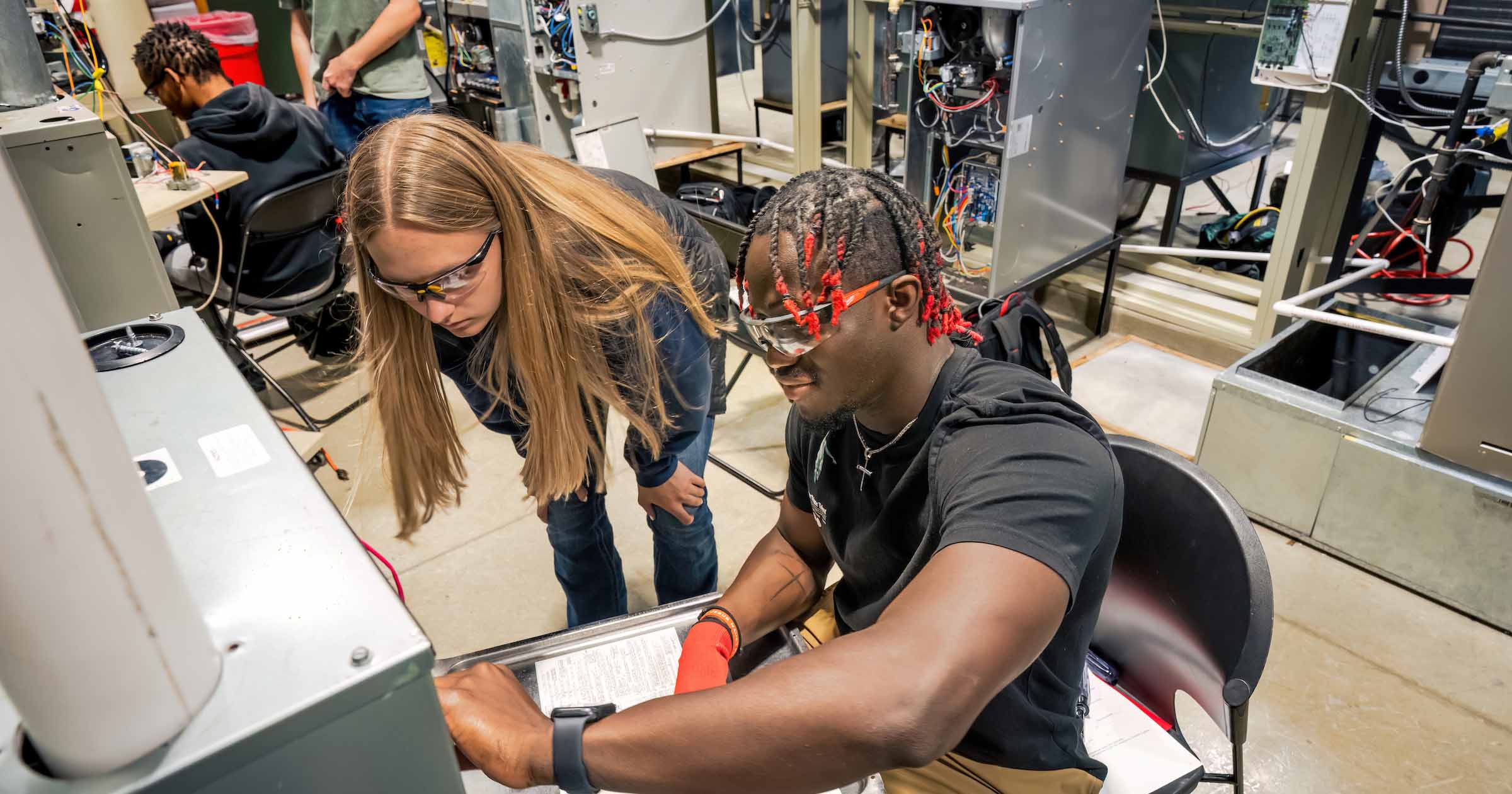
Guest earned both his associate and bachelor's degrees in HVACR at Ferris State, one of only two institutions in the United States to offer a Bachelor of Science in HVACR.
The U.S. Bureau of Labor Statistics projects that HVACR employment will grow 8% to 9% through 2034. This rate is "much faster than average" for all jobs, with an estimated demand for more than 40,000 new job openings every year.
Ferris State’s Associate of Applied Science in HVACR Technology is a two-year, hands-on program where students learn how to repair, troubleshoot, and install electrical and mechanical HVAC systems.
The Bachelor of Science in HVACR Engineering Technology and Energy Management program is a two-year, upper-division program. It bridges the gap between field technicians and engineers, with students learning to design systems, perform energy audits, and manage building automation.
Students work in state-of-the-art facilities like the Granger Center for Construction and HVACR on the Big Rapids campus.
The program includes environmental chambers used to simulate heating and cooling extremes, and a top-tier Direct Digital Control lab to study building automation. An Energy Lab allows students to operate a real mechanical room with chillers, boilers, and air handlers.
The bachelor’s degree can be completed on the main campus or fully online. Online students visit the campus for a short, one-week summer lab.