February 13, 2026
Ferris State’s Electronics & Automation Engineering Tech program joins SACA, allows Bulldogs to earn industry experience
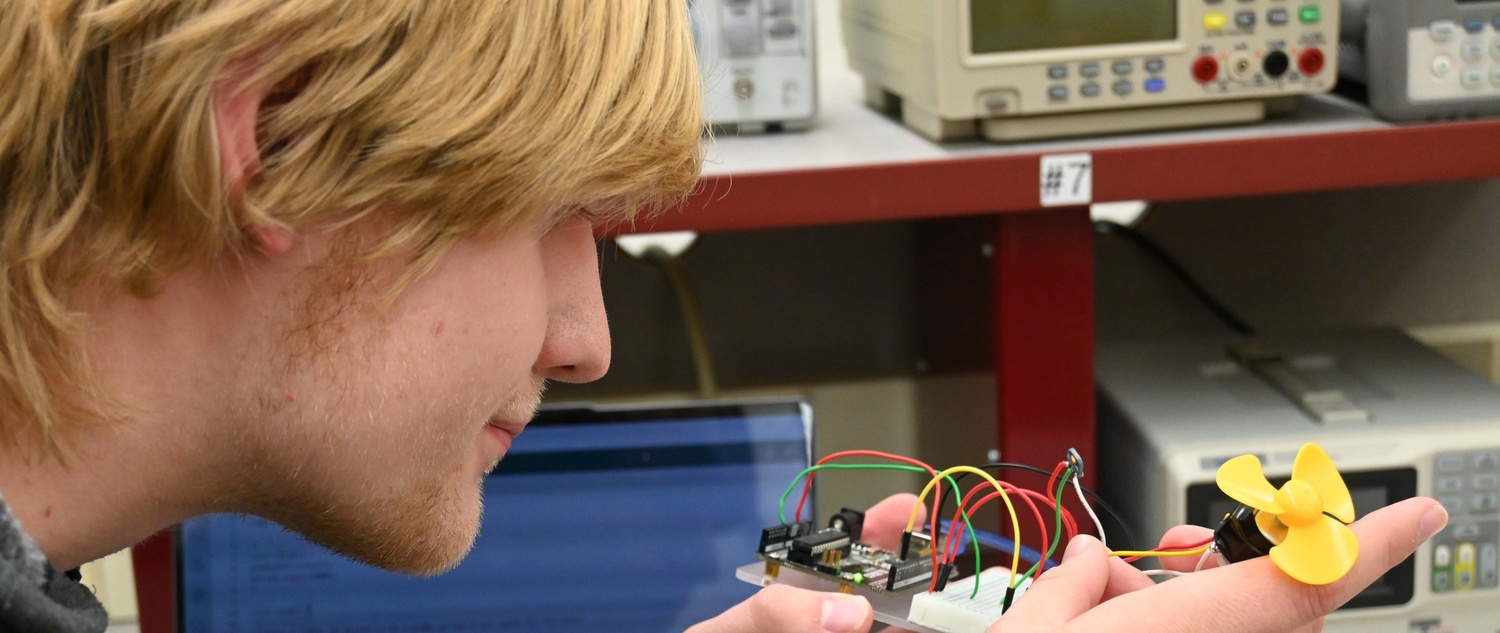
Ferris State University’s Electronics & Automation Engineering Technology program is helping Bulldogs get the edge on their peers after recently joining the Smart Automation Certification Alliance, opening the door for students to align their education and training to earn Industry 4.0 certifications.
Also known as the Fourth Industrial Revolution, Industry 4.0 is the latest disruption of the industrial world while resulting in reduced downtime and increased quality, productivity, and overall efficiency in industries of all kinds thanks to advanced technologies that make up what is known as the Industrial Internet of Things.
SACA’s Industry 4.0 certifications allow Ferris State students to sharpen their skills that address the integration of the many types of advanced manufacturing technologies with Industry 4.0 technology.
Bulldogs can earn SACA certifications at the associate, specialist, and professional level in multiple areas, including basic and advanced operations, robot systems, data analytics and information technology operations.
Debbie Dawson-Gunther, associate professor for the School of Engineering and Computing Technology, said her return to Big Rapids last fall was highly motivated by the idea to enhance Ferris State’s EAET program through the SACA certification opportunity- recently introduced to her through an NSF grant she oversaw while at a community college.
Dawson-Gunther noted that although she and fellow educators identified the standards for the certification process, the content was determined by the needs of industry partners related to the EAET field.
“This really is coming from our industry partners. What skills do the industries want their next employee they hire to have?” she said. “That’s why we look at these micro-credentials to provide the guidelines for our curriculum to break down the needed skills and knowledge into manageable chunks.”
IIoT technologies include such things as advanced robotics, machine learning, artificial intelligence, autonomous vehicles and machines, cloud-based data analysis, and cybersecurity. As companies increase their use of networks and Internet technologies, they are connecting more devices, from smart sensors to smartphones, to manufacturing lines, to building systems.
Students will have the option of pursuing silver certification - which includes successfully passing a proctored written knowledge exam - or gold certification that requires passing a similar exam and completing a hands-on performance assessment on approved equipment. Attempting to complete each tier of certification depends on the student’s current coursework and hands-on skill development.
SACA certifications are meant to instill confidence in students vying for extra knowledge, as the certifications use standards developed with input from industry leaders that students will use in their professional careers.
As Ferris State is still in the pilot phase of the SACA certification opportunity, Dawson-Gunther was more than ecstatic to see the first trio of automation students attempt three exams - one of which was optional – related to the SACA standards. Each Bulldog passed all three certification tests this past semester.
She recognizes that this type of success helps the Electronics & Automation Engineering Technology program stand out amongst other institutions, but more importantly, gives students a head starts on their professional careers, whether it’s an internship or job opportunity.
With the SACA opportunity now available at Ferris State, Dawson-Gunther believes the number of students working towards those certifications will grow exponentially into the hundreds this upcoming fall semester.
“Now that we’ve had a chance to implement the first round of certification testing and students are becoming more comfortable with the process, I’ve gotten nothing but excitement and support from colleagues from the EAET program and the college,” she said. “They absolutely see how powerful industry credentials can be, and I’m confident the opportunity is only going to keep growing. I tell students all the time (to) take a serious look at what these credentials can do for you. They can open doors, boost your career, and help you land better jobs. The opportunities are going to take off in big way for them.”
More EAET Stories
