May 28, 2026
Ferris State students in first Cold Case Investigations class say they’re making progress in solving murder case
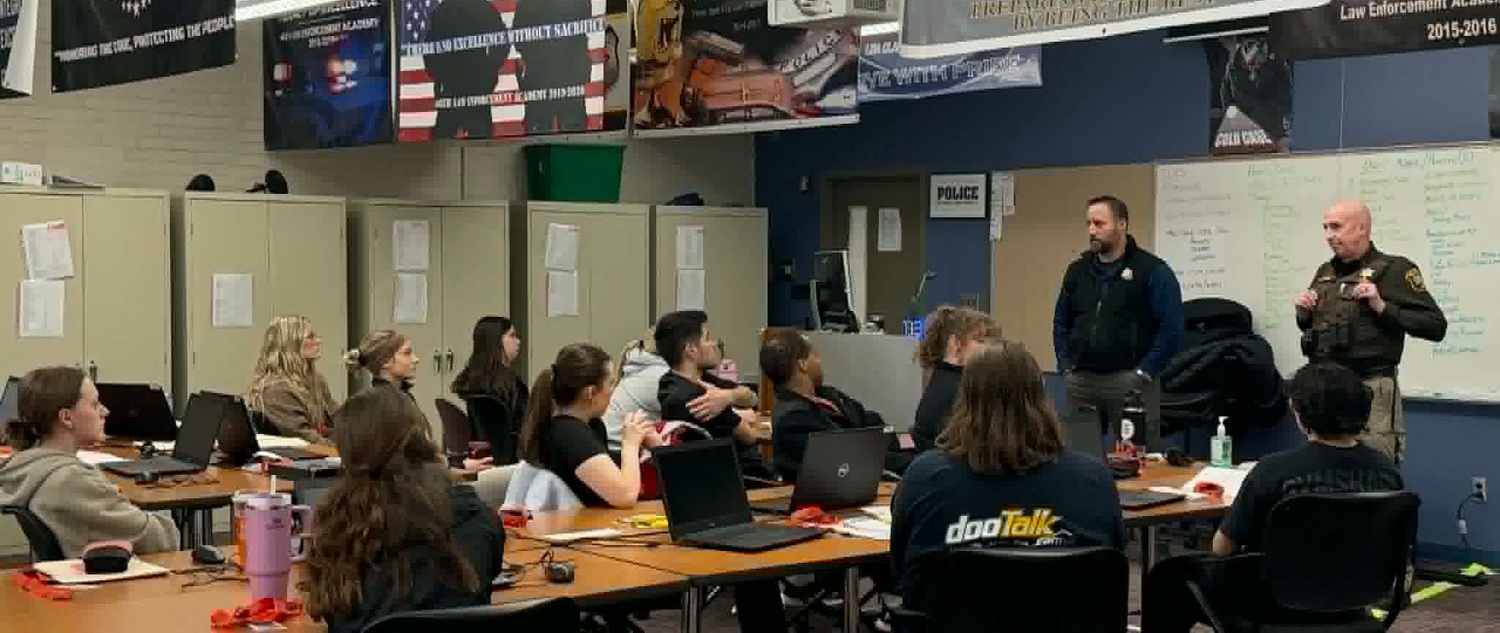
Students in Ferris State University’s inaugural Cold Case Investigations class say they are making progress on a mystery that has been unsolved for years.
Dr. Steven Amey, a former St. Clair County Sheriff’s detective and tenured professor in the Ferris State School of Criminal Justice, said students laid the groundwork for their investigation by organizing decades of investigative material, converting thousands of pages into searchable Optical Character Recognition documents.
Student work generated new investigative questions and led to evidence being resubmitted for modern forensic analysis. This Cold Case class reinforced real-world investigative context.
“I could not be more proud of the first group of Ferris State cold case students who stepped up to get involved and tackle this work,” Amey said. “Without a doubt the students will become some of the best in their fields they pursue, having an eye for the attention to details.”
Students are taking a fresh look at the 2010 death of Kristin Spires, who was discovered in a remote part of Mecosta County.
Students recently revisited the crime scene to at least one location in the investigation. It added the real-life experience of being present at the exact location.
“We are looking for closure and an answer for the family" said Mecosta County Sheriff Brian Miller, who has spoken to the class. “They deserve an answer to what happened to their daughter. It is one of those cases that you will never forget about."
Amey said the students put a fresh set of eyes on this case and helped move it forward.
“Technological advances and good old detective work are getting this case closer to being solved,” he said.
Weekly student collaboration allowed timelines, facts, and theories to emerge clearly, breathing new life into a case that had been dormant for many years.
Students met with expert guest speakers, exploring the realities of modern cold case investigations.
Senior Assistant Prosecutor Amy Goodrich of St. Clair County discussed cold case prosecution and DNA evidence, including the role of Othram Labs.
Michigan State Police forensic biology expert Billie Hooker outlined forensic laboratory options across Michigan.
Mecosta County Sheriff Brian Miller and Undersheriff Casey Nemeth provided candid insight into investigative challenges.
Amey said students taking the class said they learned about values of teamwork, organization, and research.
“I will definitely take away the importance of having fresh eyes look at cold cases,” one student wrote in a post-class assessment. “I believe that as a class we were able to notice details and perspectives … that may not have viewed as significant at the time. I also think the advancements in DNA technology can make a big difference in helping investigators solve cases years later.”
Forensic science is a growing field, with the U.S. Bureau of Labor Statistics projecting a 14% increase in employment for forensic science technicians from 2023-2033 — significantly faster than the average for all occupations.
The demand is driven by increasing police caseloads and advancements in scientific and technological tools.
The Cold Case class is open to all majors and is an elective, there is an application process and students selected must be willing to submit to a criminal background check and sign a non-disclosure agreement.