
February 22, 2026
Ferris State Athletics celebrating athletic and academic opportunities on ‘Division II Day’
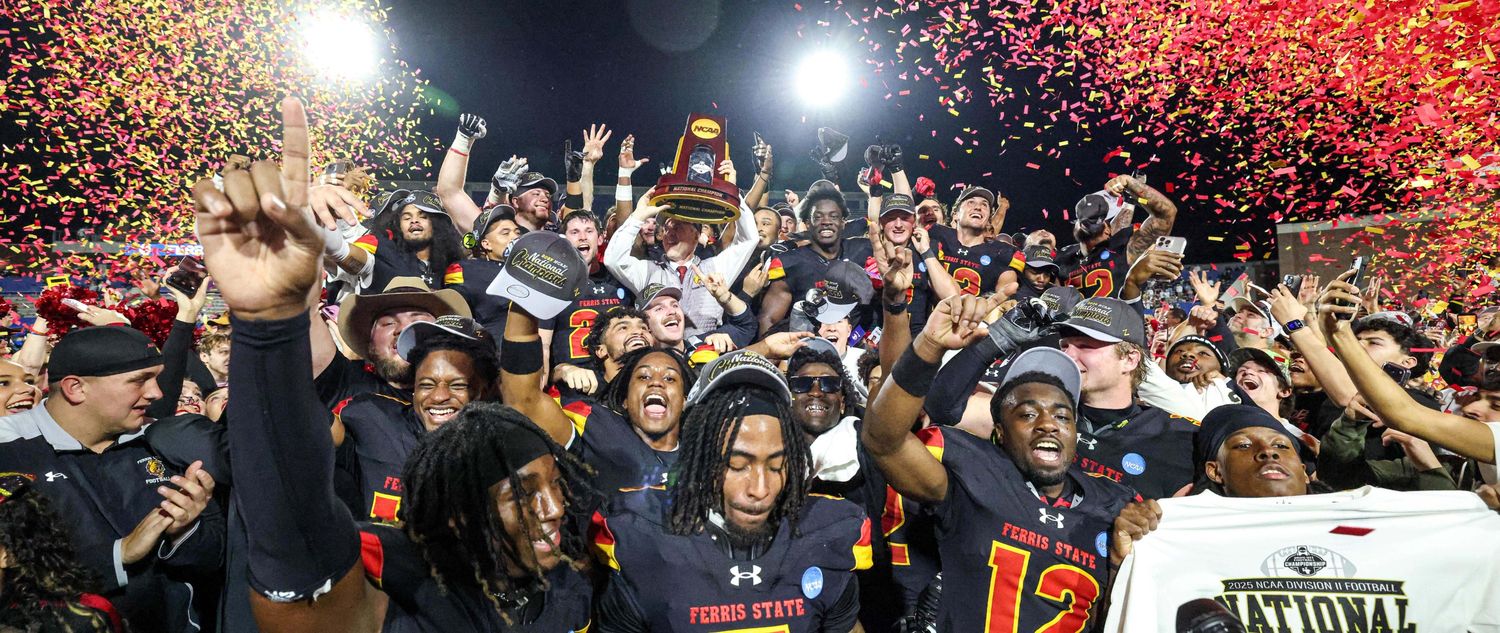
Ferris State University and Bulldog Athletics celebrated DII Day on Sunday, joining hundreds of other NCAA Division II programs across the country for a special celebration.
DII Day is an opportunity to celebrate the impact of athletics and of student-athletes on their campus and community. Every DII school and conference is sharing the benefits of being a part of Division II and showcase student-athlete success stories on their athletics website and social media channels.
The DII Day initiative provides great opportunity for student-athletes, coaches and athletics administrators to connect with their communities through community engagement and show that the passionate support goes both ways. The goal is for DII Day to build a greater awareness and understanding of Division II athletics.
As part of the DII Day weekend, the Bulldogs held a Future Bulldogs Youth Sports Day on Saturday in advance of the Bulldogs' home men's and women's basketball doubleheader versus Northern Michigan University.
The event featured Ferris State student-athletes teaching children sports skills through activities and sharing the benefits of being an athlete. The event was just one of many community initiatives Ferris State’s 18 varsity programs take part in each and every year.
DII Day also provides institutions with an opportunity further share the divisional model, which includes characteristics that set Division II apart.
THE DISTINGUISHING DOZEN: 12 characteristics that set Division II apart.
- Graduation rates: The Division II student-athlete graduation rate is consistently higher than that of the total student body. Division II also features a high number of first-generation college students, thus increasing the access to education.
- Academic emphasis: Division II's regionalization philosophy in scheduling limits missed class time for student-athletes.
- Athletics scholarships: The partial athletics scholarship model rewards athletics ability while allowing student-athletes to earn other sources of financial aid.
- Balanced bottom line: The median expense for Division II athletics programs is millions of dollars less than for their Division I counterparts.
- Favorable admission rates: Division II membership is split almost evenly between public and private institutions. On average, Division II schools have the highest admission rate (70 percent, versus 62-63 percent in the other two divisions).
- Community engagement: Through student-athlete leadership, Division II has enjoyed long-term and successful partnerships with the Make-A-Wish Foundation, Team IMPACT and military groups. In addition, Division II conducts community engagement activities at all championships final sites.
- Positive game environment: Division II members pledge to conduct athletics contests in a family friendly environment that is civil and entertaining.
- Unique geographical footprint: Division II is the only NCAA division with schools in Alaska (Anchorage and Fairbanks), Puerto Rico (Bayamon, Mayaguez and Rio Piedras) and Canada (Simon Fraser).
- National championship opportunities: Division II features unparalleled opportunity for student-athletes to advance to national championship competition as a result of the division's generous championship access ratios (the highest among the three NCAA divisions).
- Student-athlete involvement: The Division II Student-Athlete Advisory Committee regularly conducts Super Region Conventions to provide student-athletes and administrators from conferences in different regions the opportunity to bolster student-athlete participation in the Division II governance structure and foster communication among SAACs at the campus, conference and national levels.
- Make It Yours: This student-athlete-driven brand enhancement strengthens awareness among external audiences by clearly communicating the experience Division II schools create for student-athletes.
- Access and opportunity: Matching grants encourage access, recruitment, selection and the long-term success of administrators and coaches.